Business
From Error Rates to Audit Risk: The Silent Threat Facing African Finance Leaders
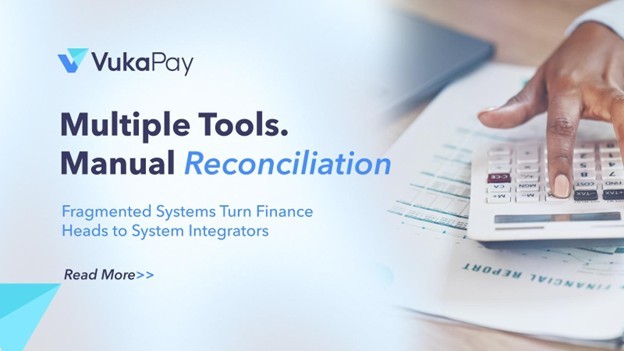
The Day We Sat With Africa’s Most Tired Finance Team
As the content team at VukaPay, we spend a lot of time talking to founders, finance leads, and operations managers across Africa.
One week, we sat with a group of finance managers from different industries. A company in Nairobi, another in Lagos, and another in Kampala.
Different sectors. Different countries. But something strange happened during the conversation.
Their problems sounded… identical.
Not similar. Identical.
Each of them had built what they believed was a perfectly reasonable finance stack.
A CRM to generate invoices.
QuickBooks for accounting.
Excel sheets for expense tracking.
Two or three banking portals.
A separate payroll system.
Individually, each tool worked fine.
Together?
They created a daily obstacle course.
A Typical Morning in the Finance Department
The day usually begins with invoices. The finance officer logs into the sales CRM and exports invoice data. Then downloads a CSV file. Then QuickBooks opens. Then they manually enter each invoice.
Next stop: the bank portals. Not one portal. Several.
Because across Africa, there are 500+ banks, over 270 mobile wallets, and more than a dozen card networks.
So they check each platform to confirm whether payments have come in.
Sometimes they have. Sometimes they haven’t. Sometimes the payment is sitting in another payment gateway entirely.
Which means opening yet another dashboard.
By the time reconciliation begins, half the morning is gone. And the books? Still not closed.
The Error That Starts a Domino Effect
One finance manager told us about a tiny mistake. A $190 invoice was entered as $910. It sounds small. But that one number triggered a chain reaction. The bank reconciliation failed. Invoices had to be rechecked. Payments had to be traced. Emails started flying. And suddenly, a five-minute task turned into hours of detective work.
The reality is this: about 3.6% of manually entered invoices contain errors. And fixing each one costs roughly $50 per invoice. Errors also trigger delayed approvals, late payments, and a flood of supplier calls. By some estimates, 36% of supplier calls happen because of payment issues.
The Visibility Problem Nobody Notices Until It’s Too Late
Now add expenses into the mix. Employees submit receipts through email, PDFs, or sometimes actual paper.
Finance teams then sit with Excel sheets matching receipts to credit card statements, and meanwhile, transactions keep flowing in from different platforms. How? A vendor may already be paid in the bank, but the CRM still shows an unpaid invoice because the fragmented systems don’t talk to each other. Sales data is one day late. Cash data is another day late, and somewhere between all those spreadsheets, a transaction quietly disappears.
For SMEs, poor financial visibility can cost $200,000 to $500,000 every year. Not through one dramatic failure but through small missed signals.
When Systems Multiply, Costs Multiply
Every new tool promises efficiency, but each one also brings:
Another subscription
Another update
Another login
Another training session
And another human is required to manage it.
Many businesses end up spending a third of their revenue on administrative work. Finance teams become less like strategists and more like system operators.
The Quiet Risk Lurking Behind Disconnected Systems
Then comes the part nobody likes to talk about. Security. Every tool has its own security protocol, its own compliance structure, and its own reporting format.
When these systems don’t connect, gaps appear, and fraud can hide in the space between platforms. Unauthorized payments can also slip through unnoticed, and discrepancies start appearing where no one expected them during audits.
On top of that, poor financial visibility can create tax compliance risks, leading to penalties that slowly eat away at profits.
Growth Hits a Wall
But the biggest problem shows up when a business tries to grow. Expansion demands clarity, real-time data, and integrated systems.
Without them, businesses struggle to:
Track spending trends
Manage inventory efficiently
Assess credit risks
Enter new markets with confidence
And when expanding into a new country means integrating yet another payment method or banking platform, the complexity multiplies. This makes growth slow down, not because demand isn’t there, but because the systems holding the business together can’t keep up.
The Moment Businesses Decide to Cross Over
Fragmented systems often feel manageable at the beginning until the cracks begin to show.
Delayed month-end closing
Compliance exposure.
Poor cash visibility.
And rising operational costs.
That’s usually when companies begin searching for a better way.
One Platform Instead of Many
VukaPay was built to solve exactly this problem.
Across 17 African countries, we’ve helped businesses replace fragmented payment systems with a single unified infrastructure. Through one API, businesses can:
Collect payments across multiple channels
Disburse funds seamlessly
Gain real-time financial visibility
Maintain consistent compliance standards
All from one platform.
Because from our experience working with finance teams across Africa, three things are always true:
Growth demands visibility.
Compliance demands consistency.
Expansion demands integration.
It’s Time to Cross Over
Fragmented systems quietly drain time, money, and opportunity.
The businesses that scale fastest are the ones that cross over to systems built for clarity, speed, and integration.
VukaPay helps you make that move. Securely. Seamlessly. Transparently.
Try VukaPay today.
Cross over to unified payments. Cross over with VukaPay.